|
for Australia Day, 2007:
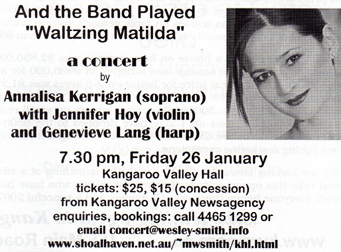
and the band played
a concert by
with
7.30pm Friday January 26 2007
|
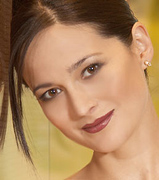
Annalisa Kerrigan |
Jennifer Hoy |
Genevieve Lang |
program
This concert being held on Australia Day gives added reason to perform several Australian pieces. These will include Eric Bogle's haunting And the Band Played "Waltzing Matilda" in a special new arrangement, and a new setting of Dorothea Mackellar's My Country. Other repertoire will be a varied mix of classical songs, solo pieces and folk-songs.
Any profits from this concert will go to the Kangaroo Valley-Remexio Partnership and be used for projects assisting people in East Timor.
Martin Wesley-Smith (this introduction continues below)
Annalisa Kerrigan
Jennifer Hoy
Genevieve Lang
download photographs here | program
Georg Friedrich Handel:
Edmund Rubbra:
Star of the County Down
The House of the Rising Sun
interval
with complimentary supper!
Benjamin Britten:
Jules Massenet:
Peggy Glanville-Hicks:
Jacob Gade:
Dorothea Mackellar (lyric),
program |
download photographs |
Jennifer Hoy |
Genevieve Lang |
KV-RP |
pre-concert dinner idea |
top
visit Annalisa's website here
Piano lessons that began when she was three, and degrees from the University of Melbourne and the Victorian College of the Arts, preceded Annalisa spending six years in Florence studying singing (and working as a model for the art studio Charles H. Cecil). During this time she developed the stunning, light lyric coloratura voice that has since propelled her into an international concert career.
Annalisa stuns audiences with her vivacity, depth of heart, and pure, impeccably trained voice. After performing on all national television stations in Australia, including on Carols by Candlelight and Good Morning Australia, she released in 2005 her debut commercial recording Waiting on an Angel with ABC Classic, where it jumped to the top of the best seller list and stayed in the top ten for eight weeks.
Annalisa is associated with several charitable foundations, including the Mental Health Foundation of Australia, the Royal Neuroscience Foundation, Think Pink (Anti Cancer Council of Australia), and the Australian Foundation for Peoples of Asia and the Pacific.
One of the most beautiful things I've ever heard
Light and luscious ... Heavenly stuff
more |
download photographs |
program |
Jennifer Hoy |
Genevieve Lang |
KV-RP |
pre-concert dinner idea |
top
Annalisa Kerrigan
Jennifer Hoy
Genevieve Lang
After beginning studies at the age of 4 through the Suzuki Method, Jennifer competed with success at numerous regional competitions in NSW, winning the New England String Championship on several occasions. She received the Mayor of Tamworth's Award for Contribution to Music in 1993, and was Dux of Calrossy School in the same year.
Upon matriculation Jennifer was placed 5th in the HSC for 3 Unit Music, and subsequently awarded entrance scholarships for both The Womens' College and the Sydney Conservatorium of Music, studying with Goetz Richter. Her undergraduate years encompassed chamber music performances (Barossa International and Camden Haven Festivals), international touring with the Australian Youth Orchestra and Camerata Australia and ABC FM broadcasts. She was also a member of the Sydney Conservatorium Chamber Orchestra under the direction of Wolfram Christ. As a member of the Concordia String Quartet Jennifer undertook short term study with the Vertavo, Australian, Ying and Alban Berg Quartets.
After graduating with 1st Class Honours Jennifer embarked on a successful freelance career as well as undertaking a Master of Music with Alice Waten at the Australian Institute of Music. During this time she also attended summer schools in Europe and Canada, including Domaine Forget, Orford Advanced Music Sessions and the Mozarteum.
Jennifer was appointed to a permanent position in the 1st Violin section of the SSO in 2001 and has also been on staff at the Sydney Conservatorium of Music since that time. She still enjoys a variety of freelance activities, including work for the Australian Chamber Orchestra, recording and performing for artists such as Bernie Hayes, Sneeze and The Whitlams, and various chamber music projects. In April 2004 Jennifer undertook a 4 month secondment to the Radio Symphony Orchestra Saarbrücken in Germany.
see SSO
Based in Sydney as a freelance harpist, Genevieve Lang often faces a
longer commute to work than most. Holding the position of Guest
Principal Harpist with the Tasmanian Symphony Orchestra, she
divides her time between the two cities.
Sydneysiders will have seen her onstage as Guest Principal and section
harpist with the Sydney Symphony, the Australian Chamber Orchestra, and
the Australian Opera and Ballet Orchestra. She has featured in several
ABC FM direct broadcasts and live recordings, as well as in studio
sessions for film scores and CD releases, with artists such as Teddy
Tahu Rhodes, David Hobson and Sara Macliver.
Genevieve has toured throughout Australia, Europe, Asia, and the United
States with the Sydney Symphony, the Tasmanian Symphony, and the
Australian Youth Orchestras. She has appeared as soloist with the
Tasmanian Symphony Orchestra, performing to a crowd of 10,000 in their
outdoors summer concert program, and also on tour with the TSO Strings
around the island of Tasmania. She has also performed as soloist
with the West Australian Symphony Orchestra in conjunction with the ABC
Young Performers Awards.
In 2004, Genevieve completed a successful concert tour of Ireland with
Annalisa Kerrigan, receiving standing ovations and
many return invitations. In the same year, she also appeared as a
soloist at the inaugural Canberra Harp Weekend in Canberra, in a
concert featuring Australia's best orchestral and solo harpists.
In Tasmania, Genevieve has appeared in recital with Virtuosi Tasmania throughout the state, and in several Sunday Live direct broadcasts on ABC Classic FM. She has successfully presented numerous pre-concert talks for the TSO, sharing her warmth and intelligence with an appreciative audience. She also works actively within the Hobart community to promote music performance and the TSO, performing for University music clubs and presenting lecture recitals for the Friends of the TSO.
An enthusiastic and accomplished performer of contemporary music, Genevieve has appeared with Halcyon, the Elision ensemble in Brisbane, the Brunswick Music Festival, and as an artist for the Sydney International Spring Festival. This year, as a founding member of the Kioloa Harp Ensemble, she toured with the group to the United States to perform new Australian works at the American Harp Society's Conference in San Francisco, an event attracting harpists from every corner of the globe.
Her teachers have included Louise Johnson and Alice Giles.
Gerard Henderson, executive director of the Sydney Institute, writes in The Sydney Morning Herald, April 19 2005 (for the full article, click here):
However, if the political leaders of Australia and New Zealand are into deciding musical themes to accompany the 90th anniversary of the landing at Gallipoli, they should extend the ban to folk singer Eric Bogle.
Bogle's songs are frequently played to commemorate the fallen of World War I - at ceremonies and in news and documentary accounts. Yet the singer-songwriter is a member of the they-all-died-in-vain club. Bogle's song No Man's Land ends with the refrain "the killing, the dying, it was all done in vain". His signature song, And The Band Played Waltzing Matilda, contains a final verse about an Anzac Day procession where a returned Digger reflects: "And the young people ask 'What are they marching for?'/And I ask meself the same question."
Yet, in spite of the popularity of No Man's Land and Matilda, the passing of the years has witnessed a growing interest in the Anzac legend and the Anzac Day march.
Bogle failed to anticipate the revival of interest by Australians in their history and, in particular, the curiosity of young Australian men and women in their ancestors.
The 90th anniversary of the Dardanelles campaign is a convenient occasion to reassess some of the prevailing myths about World War I in general, and Gallipoli in particular, which were prevalent when the left-wing interpretation of Australia was dominant ...
Perhaps this performance of Mr Bogle's song will, despite Mr Henderson's disapproval, encourage people to "ask (themselves) the same question" and to come up with their own answers.
And the Band ... is perhaps more an ANZAC Day song than one for Australia Day. But the 26th of January is not only a day to rejoice in, be grateful for and to love this all-too-sunburnt country, this land of sweeping plains - and, allegedly, of flooding rains - it's also a time to reflect on Australian society - its successes and its failures - without the jingoism that now inhabits the One Day of the Year. Before the Coalition of the Willing surges in Iraq, and the band plays Waltzing Matilda yet again, and as politicians and shock-jocks condone the use of the Australian flag and nationalism as a cover for vicious attacks on anyone different, it's an appropriate time to ask anew if it's ultimately in anyone's best interests for us to pursue aggressive war in other parts of the world, devolving our foreign policy to others as we do so ...
This concert will include a wide range of music, from Handel's Lascia ch'io pianga to recent works such as Ross Edwards's White Cockatoo Spirit Dance. An eclectic mix. There's even some Mozart, just when you're thinking, after a year of wall-to-wall Mozart (celebrating the 250th anniversary of his birth), that enough is enough. In addition to the performers mentioned, a soon-to-be-acclaimed yet-to-be-named busily-rehearsing local choir will contribute its smooth harmonies to And the Band ... plus perform a song that glorifies those who died in the fight for freedom for East Timor. The Australian War Memorial has given us permission to project images from its vast collection during And the Band ... And - STOP PRESS! - a new silent movie, It Takes Three, about passionate proletarian possessiveness, will premiere during the performance of Gade's Tango Jalousie (Jealousy). It stars the Valley's much-loved stars of the sepia screen Paul Turnock as Dirty Dan and Helen George as Fluff, and introduces Les Mitchell as the roaming roué Theodore Tonk!
September 2006 saw the inaugural Kangaroo Valley Folk Festival, a wonderful event despite being subjected to what was an otherwise very welcome old-style Kangaroo Valley deluge. When I turned up at the box office, the woman there said something like "Great to see one of you lot here!". "What do you mean, one of me lot?", I asked. "You know, one of you classical mob", she said. "Listen here:" I replied, "I was a folkie before you were born, and before I got interested in so-called 'classical music', or 'art music'. Just 'cos I like one doesn't mean that I can't like the other!" While it could be said that this concert will have something for everyone (including folk songs), I think it will be more a matter of having everything for everyone: I'm confident that for most people the quality of the pieces, and the excellence of the performances and presentation, will push down the barriers between musical idioms and provide a concert experience at least as enjoyable as the one that the Kioloa Harp Ensemble gave us. Only one problem: I doubt I'll enjoy the Strauss waltz - no matter how well it is sung and played - with which the concert will begin. I usually don't, despite his alleged "incredibly-refined sensuality" - but I'm sure that I will be in the minority.
As Oscar Hammerstein II wrote in The Lonely Goatherd: "HOO!".
Café Bella, an easy walk from Kangaroo Valley Hall, will be open for dinner from 5.30pm with a full a la carte menu prepared by owner/chef Tish Banks (previously of The Wharf, Sydney). Bookings essential: 02 4465 1660. Address: 151 Moss Vale Rd, Kangaroo Valley NSW 2577. Bella's regularly assists the Kangaroo Valley-Remexio Partnership, and its maitre d', Guy Novich, starred in one of the previous Dirty Dan movies (Dirty Dan: The Old Grey Mayor, 2005, of which a small number might be available for sale (DVD, $25) at the concert).
Silent film afficionados will be interested to read about Australia's Silent Film Festival (taking its cue from The Annual Kangaroo Valley Buster Keaton Silent Film Festival) in Sydney from March 30 to April 1 this year.
Johann Strauss Jr., Vienna's greatest composer of light music, was known for his waltzes and operettas. His music seems to capture the height of elegance and refinement of the Hapsburg regime ... his most famous waltzes ... include On the Beautiful Blue Danube (1867), probably the best-known waltz ever written ... The finest of (his operettas), Die Fledermaus (1874; The Bat), is probably the greatest operetta ever written ... the famous waltzes Roses from the South (1880) and Voices of Spring (1883). This last work, most often heard today as a purely instrumental composition, was originally conceived with a soprano solo as the composer's only independent vocal waltz. He wrote more than 150 waltzes, 100 polkas, 70 quadrilles, mazurkas, marches, and galops. His music combines considerable melodic invention, tremendous verve, and brilliance with suavity and polish, even at times an incredibly-refined sensuality ... He was admired by prominent composers of the day, including Richard Wagner and Johannes Brahms ...
read more here
Mozart showed musical gifts at a very early age. His father Leopold felt that it was proper, and might also be profitable, to exhibit his children's God-given genius (daughter Maria Anna, "Nannerl", 1751-1829, was a gifted keyboard player): so in mid-1763 the family set out on a tour that took them to Paris and London, visiting numerous courts en route. Mozart astonished his audiences with his precocious skills; he played to the French and English royal families, had his first music published and wrote his earliest symphonies. The family arrived home late in 1766; nine months later they were off again, to Vienna, where hopes of having an opera by Mozart performed were frustrated by intrigues ...
In his early years in Vienna, Mozart built up his reputation by publishing (sonatas for piano, some with violin), by playing the piano and, in 1782, by having an opera performed: Die Entführung aus dem Serail, a German Singspiel which went far beyond the usual limits of the tradition with its long, elaborately written songs (hence Emperor Joseph II's famous observation, "Too many notes, my dear Mozart"). The work was successful and was taken into the repertories of many provincial companies ... Haydn told Leopold that Mozart was "the greatest composer known to me in person or by name; he has taste and, what is more, the greatest knowledge of composition" ... [more]
Handel's father was a barber-surgeon who disapproved of music, and wished George Frederick to become a lawyer. But a friend smuggled a clavichord into the attic so that the little boy could practise secretly ... In 1697 Handel's father died. In 1702 he became cathedral organist; after his "probation" year he went to Hamburg, becoming friends with Matheson, a prolific composer and writer on music. On one occasion they went together to Lübeck, where a successor was to be appointed to the great organist Buxtehude. But they discovered that the successful candidate was required to marry Bustehude's elderly daughter ... In 1705 Handel's first opera, Almira, was performed at Hamburg with great success. Its mixture of Italian and German language and form is a valuable example of the tendencies of the time and of Handel's eclectic methods ...
He wrote forty-one Italian operas, two Italian oratorios, two German Passions, eighteeen English oratorios, four English secular oratorios, four English secular cantatas, and a few other small works, English and Italian, of the type of oratorio or incidental dramatic music; three Latin settings of the Te Deum; the (English) Dettingen Te Deum and Utrecht Te Deum and Jubilate; four coronation anthems; three volumes of English anthems (Chandos Anthems); one volume of Latin church music; three volumes of Italian vocal chamber-music; one volume of clavier works; thirty seven instrumental duets and trios (sonatas), and four volumes of orchestral music and organ concertos (about forty works). Precise figures are impossible as there is no means of drawing the line between pasticcios and original works. The instrumental pieces especially are used again and again as overtures to operas and oratorios and anthems ...
re Ross Edwards' The Promised Land, meditation etc
White Cockatoo Spirit Dance has all the characteristics of a maninya, a form Edwards evolved throughout the 1980s which has left a definitive stamp on his own and much other recent Australian music. Vibrant, captivating, life-affirming, and virtuosic, it is a spontaneous melodic outpouring whose obsessive rhythms appear to have been ritualised from nature. (Edwards claims to have been influenced particularly by the sounds of insects). It also exists as a viola solo: the second movement of Enyato II.
As a composer, Plakidis' main sphere of interest lies in symphonic and chamber music. He has written many works for theatre and film, having held the position of Musical Director of the Latvian National Theatre from 1969-1974. His music has been described as multi-faceted, but always with a classicistic balance of form; a drawing together of neo-classical and romantic worlds. Lyrical, emotional, yet with an intelligent and considered development of musical thoughts and ideas, Plakidis' compositions often draw on characteristic Latvian folk music melodies, rhythms and typically diatonic harmonies.
The tradition of vocal and choral music holds an important place in Latvian culture. As such, Plakidis also has many choral compostions to his credit, and works alongside his wife, mezzo-sporano Maija Krigena, in accompanying and coaching young Latvian singers at the Latvian Academy of Music. Plakidis also performs regularly as a pianist on both sides of the globe with his chamber group The Transatlantic Trio.
Genevieve Lang
"In his works Plakidis uses a synthesis of ideas and influences. He has adopted the high order of internal organization and objectivity provided by Renaissance and Baroque polyphony and forms such as fugue, chaconne, canon and variation. He has created a style that, while rooted in the diatonicism of folk music, avoids folksong arrangement and rarely uses folksong quotations. Plakidis is a subtle connoisseur of Western European and Russian musical styles and a virtuoso master of stylization. This he normally realises not by a crass apposition of styles (as in a collage) but in a setting of harmonious, tasteful integration of styles. Finally, Plakidis's music is made particularly attractive by his subtle feel for orchestration, in which he approaches Tchaikovsky, Mahler and Stravinsky." [more information here]
CHORUS: Mayeela la yee ...
CHORUS: Mayeela la yee ...
CHORUS: Mayeela la yee ...
The body of the dongbula is made of wood, and looks like an enlarged spoon. The making of the earliest form of dongbula is very simple. The artist cuts an entire piece of wood into the shape of a spoon, mounts a faceplate, and then draws two pieces of sheep intestines, and finally fits it onto nine tambours at the end of the handle.
With the dongbula, the Kazak people don't feel lonely while out cattle grazing. After returning home, they can enjoy themselves with their families, singing and dancing to the music played by dongbula.
The dongbula can be played solo or in ensemble and accompaniment. The way of performing is quite the same with that of other instruments. Through the various ways of performing the instrument, listeners may have vivid images of gurgling springs, clear bird twitter, joyful flocks of sheep, and spanking horses with beating hooves. [see here]
Edmund Rubbra,
American poet Witter Brynner (1881-1968) had a remarkable facility for catching the cadences of other writers and cultures. Under the pseudonym Emanuel Morgan he collaborated with Arthur Davidson Ficke in writing Spectra (1917), a book parodying contemporary poetic vogues such as imagism and considered, for a time, a serious work. With Dr. Kaing Kung-Ho, Bynner translated 300 Chinese poems published in The Jade Mountain (1929) ... He became a friend of D. H. Lawrence, and travelled with him and Frieda in Mexico. Much later, in 1951, he wrote on Lawrence, while he and his partner Willard Johnson are portrayed in Lawrence's The Plumed Serpent ... [more]
Her hands of white jade by a window of snow
IV. A song of the Southern River
Since I married the merchant of Ch'üt'an
As He Moved Through the Fair
2 And he stepped away from me and he moved through the fair,
4 Last night he came to me, my dead love came in,
copies will be available
download MIDI file (see here)
chorus:
2 As she onward sped I shook my head and I gazed with a feeling rare
chorus
chorus
4 At the harvest fair I'll be surely there and I'll dress in my Sunday clothes
chorus
2 If I had done like Mama said, I wouldn't be here today,
4 I'm going back to New Orleans, my race is almost done;
Like many classic folk ballads, the song's authorship is dubious. Folklorist Alan Lomax, wrote that the melody was taken from a traditional English ballad and the lyrics written by a pair of Kentuckians named Georgia Turner and Bert Martin. Other scholars have proposed different explanations, although Lomax's is generally considered most plausible ...
The traditional lyric that Lomax recorded was as sung by a man:
If I had listened what Mamma said
Go tell my baby sister
My mother she's a tailor
Fills his glasses to the brim
One foot is on the platform
Going back to New Orleans
Artists ranging from Nina Simone to Bob Dylan to Dolly Parton have recorded the song. Folksinger Dave van Ronk recounted that he had originally worked out the arrangement that Dylan then "borrowed" for his first album, and which was subsequently borrowed in turn by Eric Burdon who, in 1964, took the song to newfound popularity when he recorded it with his British rock group The Animals ... [more]
Then in 1915, my country said, 'Son,
And the band played Waltzing Matilda,
And how well I remember that terrible day,
Johnny Turk he was waiting, he'd primed himself well
But the band played Waltzing Matilda
And those that were left, well we tried to survive
The big Turkish shell caught me arse over head,
So they gathered the crippled, the wounded, the maimed,
And as our ship pulled into Circular Quay,
But the band played Waltzing Matilda
And so now every April I sit on me porch
And the old men march slowly, old bones stiff and sore
But the band plays Waltzing Matilda
Waltzing Matilda, waltzing Matilda
Eric Bogle
The song is often praised for its haunting imagery of the devastation at Gallipoli. The protagonist in the story loses his legs in the battle, and after the war notes the passing of other veterans with time, as younger generations become apathetic to the veterans and their cause. The song, written in 1972, rails against jingoism and the romanticising of war. As the old man sits on his porch, and watches the veterans march past every ANZAC Day: "And the young people ask 'What are they marching for?', and I ask myself the same question".
Eric Bogle (left)
He is a warm and engaging stage performer, and his songs have the knack of getting straight to the heart of the matter with intelligent and well-crafted lyrics. He has recorded 14 CDs so far, and is at present working on his 15th. A DVD is also in the tentative planning stage, but will probably remain so unless he wins Tattslotto in the next couple of years.
Eric has been described as a bit of a living legend, a label which he is uncomfortable with, but, as he says, "it's marginally better than being a dead legend" ... He has made 11 tours of North America with his partner in crime, John Munro (The Elderly Brothers, as they are often called by their peers, more or less respectfully - well, probably less). In 2006 he made trips to Scotland and Alaska and toured the UK and Ireland with a couple of side trips to Denmark. Eric toured Eastern Australia in February/March April 2006 to promote his new CD Other People's Children.
Eric and John hope to do a separate tour of Western Australia in 2007 because, as any self-respecting Sandgroper will tell you, Western Australia is a totally different country from the decadent and wimpish east of the country. [read the original here]
Lance-Cpl Jacka, V.C.
Then in 1915, his country said, "Son,
And the band played Waltzing Matilda,
How well Tom remembers that terrible day
Johnny Turk he was waiting, he'd primed himself well
But the band played Waltzing Matilda
And those that were left, well they tried to survive
The big Turkish shell caught him arse over head,
So he would go no more Waltzing Matilda
So they gathered the crippled, the wounded, the maimed,
But the band played Waltzing Matilda
And for years every April Tom sat on his porch
And the old men marched slowly, old bones stiff and sore
But the band plays Waltzing Matilda
Now no-one is left from Gallipoli's shore
So each year our vet'rans are proudly displayed
While the band plays Waltzing Matilda
Still the band plays Waltzing Matilda
Waltzing Matilda, waltzing Matilda
Timor flowers show
On January 23 2007 we received the following message from Sister Susan Connelly, of Mary MacKillop East Timor, about a member of the Anin Murak Choir from East Timor that visited Kangaroo Valley and gave us a memorable concert in 2000:
"She was so tiny when I saw her lied down in bed. Her mother was sitting next to her all day and night. Her children was crying out loudly colling her name over and over. As we set outside talking about the 23rd of us went to Australia in 2000 we cried. Thinking of the two members in Anin Murak Choir died urgently Nilo and Gaspar. We asked each other who is going to be next.. I said only God knows that."
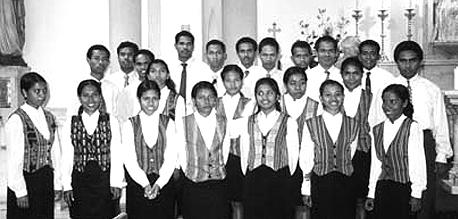
Anin Murak in Sydney in 2000. Nilo is on the right of the front row.
Copies of Foul Fowl and Second Expedition will be available for sale at the concert, with proceeds going to the Kangaroo Valley-Remexio Partnership (note: only 332 days left to Christmas!)
In 1961 Britten was completing one of his major works, the War Requiem. This was written for the reconsecration of Coventry Cathedral, which had been bombed during World War II. The emotions churned up by that work apparently found an outlet in the Corpus Christi Carol, with its image of a knight suffering and dying.
From about 1935 until the beginning of World War II, Benjamin Britten did a great deal of composing for the GPO Film Unit, for BBC Radio, and for small, usually left-wing, theater groups in London. During this period he met and worked frequently with the poet W. H. Auden, who provided texts for numerous songs as well as complete scripts for which Britten provided incidental music ... He is widely regarded as the greatest English composer since Purcell, with many well-known works to his name e.g. Young Person's Guide to the Orchestra, Hymn to St. Cecilia, A Ceremony of Carols, the operas Albert Herring, Billy Budd, The Turn of the Screw and Death in Venice, and numerous chamber and choral works, folk song arrangements etc ... [more]
He bare hym up, he bare hym down,
In that orchard ther was an hall,
And in that hall ther was a bede,
And yn that bed ther lythe a knyght,
By that bedes side ther kneleth a may,
And by that bedes side ther stondith a ston,
Massenet wrote operas with one eye on the prima donna who was to sing them. This habit was not discouraged by his wife, who knew that prima donnas were his bread and butter. But she encouraged him to send them operas rather than pearl necklaces.
As Oscar Hammerstein II might have written, "WOO HOO!" ...
Massenet studied under Ambroise Thomas at the Conservatoire, and traveled his full three years as a Prix de Rome winner, making the acquaintance of the ubiquitous Liszt while in Rome. He returned to Paris in time to shoulder a gun during the siege of 1870 in the Franco-Prussian War. He then settled down to teaching counterpoint at the Conservatoire, writing operas, and enjoying the footlight existence of the opera composer. His personal charm and the style of the particular kind of operas he wrote, at the particular time he wrote them, brought him wide popularity. When he died in his apartment in Paris, there were many more than the bereft prima donnas to mourn his loss.
bio last edited by Nymphenburg; for more information, click here
Martin Wesley-Smith (left) and friend
MW-S
Martin has recently been commissioned to compose a song for soprano Yvonne Kenny to sing at the inaugural Kangaroo Valley Arts Festival, April 20-22 2007.
In 1938 Sir Adrian Boult conducted her Choral Suite in the I.S.C.M. Festival in London, the first time Australia had been represented in this Festival. In 1942 she moved her base of operations to America, and in 1948 again represented Australia in the I.S.C.M. Festival at Amsterdam, when the Concertgebouw Chamber Group performed her Concertino da Camera. Most of her works were written in America in the 1940s, 1950s, and 1960s, and most have been recorded, including two of the four operas (including The Transposed Heads, with libretto by Thomas Mann, premiered in Louisville in 1954, and in New York in 1958) ... [more]
from a set of five, 1987
Piazzolla returned to Argentina a decade later and began to play the bandoneon in dance bands, as well as undertaking composition lessons with Alberto Ginastera. He also spent time in Europe studying with the renowned composition mentor Nadia Boulanger who encouraged him to follow his own style rather than persisting with traditional classical forms and sounds. Piazzolla eventually formed his own band and played nothing but tangos, distilling elements of jazz and his classical training to create "tango nuevo".
However, as this Tango Etude shows, Piazzolla did not completely turn his back on conventional forms. Originally written for flute or violin, the Etudes are reminiscent of Bach in the way they create many voices with a solo instrument, and draw on dance forms. The natural virtuosity and expression of the tango, as well as the accents and carefully notated respirations, create convincing character pieces that demonstrate the culmination of the tango nuevo style.
by Jacob Gade
composed in 1925
While most tangos come from Argentina, this one is said to be the best-known piece of music ever written by a Dane. At one stage during the 1970s, the only song played more often than Jealousy was The Beatles' Yesterday. Composer Jacob Gade was a bandleader and conductor, performing in the restaurants and theatres of Copenhagen. In 1921 he was made leader of a 24-piece orchestra at the Palads Cinema in the days when silent movies were accompanied by live music. It was usually up to the bandleader to score a new movie, and the formula most frequently used was to mix a selection of standard classical pieces with some original compositions. Tango Jalousie was one of those compositions. Gade described its origins in these words:
Gade used Tango Jalousie to accompany a silent movie called Don Q, Son of Zorro in 1925. Words were later added to the tune, and the song was sung by many singers, including Vera Lynn and Placido Domingo. It has featured in many films over the years, including the feel-good wartime comedy Anchors Aweigh starring Frank Sinatra and Gene Kelly, and Schindler's List, the movie version of Australian Tom Keneally's novel. It also made a brief appearance, along with other things, in The Full Monty.
On this occasion, the music will be accompanied by a silent movie, It Takes Three (Pump-Out Productions, Kangaroo Valley, 2007), which stars Helen George, Les Mitchell, Red (a Volvo), and Paul Turnock. Camera: Belinda Webster. Camera & editing: Martin Wesley-Smith.
photo: Jack Mitchell
There's a time for us
Somewhere
There's a place for us
Leonard Bernstein was a hard-working musician, starting out initially as a pianist. He studied at Harvard University where was coached by Walter Piston and Aaron Copland (with whom he formed a life-long musical association). Then at Tanglewood Music Centre he studied with Serge Koussevitzky. These influences led him from full-time performing into the art of composing. He became assistant conductor of the New York Philharmonic Orchestra, where a particular event gave him instant acclaim and a widespread following. Bruno Walter was to conduct a significant concert by the orchestra which was to be broadcast live on Radio. Walter was unable to fulfil this engagement and the principle conductor (Artur Rodzinski, who had appointed Bernstein) was away, and so Bernstein was called upon to fill in. He later became the orchestra's musical director, and was to become one of the foremost conductors of the day, leading orchestras throughout the world and gaining a reputation for his interpretations of composers such as Beethoven, Mahler, and other masters including Brahms and Sibelius. He was also to conduct the world premier of Charles Ives' 2nd Symphony in 1951 ... In a sense, Bernstein took the trend established previously by Copland of blending elements of popular American culture into the classical tradition, and his earlier songs (for example those from On the Town) certainly bore a resemblance to the music of George Gershwin ... (He) seemed most at home with a fusion of classical, jazz and popular influences, giving his work a powerful dramatic feel but with an gritty urban realism ...
Concert works included three symphonies, an opera (Trouble in Tahiti), a ballet (Fancy Free), Prelude, Fugue and Riffs, for clarinet and jazz ensemble, and the symphonic suite On the Waterfront. Musicals included On the Town, Candide and 1600 Pennsylvania Avenue ... [more]
painting by Norman August Grosskopf, 1966
I love a sunburnt country
A stark white ring-barked forest
Core of my heart, my country!
Core of my heart, my country!
An opal-hearted country
Bill Gleeson (with country singer Beccy Cole)
According to Gleeson, the musical explores Dorothea Mackellar's character "through her wealthy upbringing, her particularly strong opinions of Australia, her deep love of the land and its beauty, and the sadness of her unfulfilled lonely later life." He confesses that writing the melody for Mackellar's much-loved My Country was the most difficult aspect of the work. "How do you find a melody good enough for one of the best pieces of Australian literature ever written?", he asks. The tune came to him unexpectedly as he was "driving from Moree to Tamworth late one afternoon just on sunset when the countryside (drought-stricken) went orange in the light. The first four bars came into my head and I raced into the first pub I could find in Bingara to jot it down on a coaster. After 3 drinks I had the whole thing!" ... [more]
Annalisa writes: "(Bill Gleeson) is a remarkably talented songwriter, with a magical penchant for improvising on the piano whilst performing his own music, and accompanying some of Australia's most popular artists, in particular June Bronhill, in all areas of music from opera to jazz and musical theatre."
I'll never know what made it so exciting
A classmate and friend of Alan Jay Lerner's at Harvard was John F. Kennedy. Like Cole Porter at Yale and Richard Rogers at Columbia, Lerner's career in musical theater began with his collegiate contributions to annual university musicals. Post graduation he wrote scripts for radio until in 1942 he was introduced to a down-on-his-heels Austrian composer called Frederick Loewe, who needed a lyricist to work with him. The product of this first collaboration was a musical, The Life of the Party that closed out-of-town, but it initiated what would become one of Broadway's most successful partnerships ... Their first hit was Brigadoon (1947), followed in 1951 by Paint Your Wagon ... Lerner collaborated with Kurt Weill on the stage musical Love Life (1948) and with Burton Lane on the movie musical Royal Wedding (1951). In that same year he also wrote the Oscar-winning original screenplay for An American in Paris ... In 1956 Lerner and Loewe unveiled their masterpiece, My Fair Lady. This adaptation of George Bernard Shaw's Pygmalion retained his social commentary, and added unusally appropriate songs for the characters of Eliza Doolittle and Henry Higgins, played originally by Julie Andrews and Rex Harrison. It was hugely popular and set box-office records in New York and London. When brought to the screen in 1964, the movie version would win seven Oscars ... Lerner's lyrics were among the most literate and passionate in 20th century popular music. [more]
Frederick Loewe was born in Vienna. His father Edmond was a famous Jewish operetta star who travelled considerably, including to North and South America and much of Europe. By the age of seven or eight, Fritz learned by ear and played on piano every new song his father rehearsed for a new musical in which he was appearing. He was able to play the entire score and help his father in rehearsals ... He attended a famous conservatory in Berlin, one year behind the virtuoso Claudio Arrau. Both won the coveted Hollander Medal, awarded by the school, and Fritz gave performances as a concert pianist while still in Germany. In 1925, Edmond received an offer to appear in New York, and Fritz travelled there with him. Deciding to go separate ways, Fritz decided he was going to "crash Broadway". But this proved to be difficult, and Fritz was on the verge of starvation many times ... He found work accompanying silent movies: he would be given a prepared score for each film. His first action would be to throw the score in the trash, composing his own melodies to suit the action on-screen, for he discovered that he had a great facility for this type of improvisation ... For a while, he delivered the mail in rural Montana on horseback. After a year, he returned to New York and did some odd jobs, including a stint at prize fighting. On the way to the men's room at "The Lambs Club", he encountered Alan Jay Lerner at a nearby table. Fritz said to him "I understand you write lyrics". Alan replied "Well, I understand you write music". They decided to collaborate ... [more]
Folks in a town that was quite remote heard
O ho lay dee odl lee o, o ho lay dee odl ay
A prince on the bridge of a castle moat heard
Men in the midst of a table d'hote heard
One little girl in a pale pink coat heard
Soon her Mama with a gleaming gloat heard
Ummm (ummm) ...
One little girl in a pale pink coat heard
Soon her Mama with a gleaming gloat heard
Happy are they lay dee olay dee lee o ...
Odl lay ee, old lay ee
English composer Andrew Lloyd Webber wrote an article about Rogers and Hammerstein in Time Magazine, published Monday June 8 1998. Excerpts:
... Great melody has always deeply affected me, and Rodgers is possibly the 20th century's greatest tune writer. This is not to deny Hammerstein's enormous contribution. The simplicity of his lyrics is truly deceptive ... Rodgers and Hammerstein did not, of course, collaborate until they were well along in their careers. Rodgers was born on June 28, 1902, on New York's Long Island to a doctor and his wife. He took to music at an early age ... By the time he went to Columbia University in the fall of 1919, he had already met his first collaborator, Lorenz Hart. That summer they had sold a song to producer Lew Fields for a show called A Lonely Romeo. (Extraordinarily, some of Rodgers' songs, to his own lyrics, appeared on Broadway even earlier, when he was 16.) But it wasn't until 1925 that Rodgers and Hart had a major hit. They wrote the songs for a lighthearted revue called The Garrick Gaieties ... Such songs as The Lady Is a Tramp, Dancing on the Ceiling, My Heart Stood Still and Blue Moon etched the duo a permanent place in theater history ... Many believe Pal Joey (1940), the story of the emcee of a sleazy nightclub, to be a landmark musical ... But even as Rodgers and Hart were taking the musical to new levels, their partnership was becoming increasingly strained. Hart was a serious drinker, and by the time of his last collaboration with Rodgers, By Jupiter in 1942, he was virtually an alcoholic. Rodgers was desperate. No one was more forthcoming with help than his old friend Oscar Hammerstein II.
Hammerstein was born in New York City on July 12, 1895. His father William was a theatrical manager; his grandfather Oscar I, a legendary impresario who took on the Metropolitan Opera by building his own opera house. The young Oscar was stagestruck from childhood, and by the time he attended Columbia University, he was performing and writing amateur routines. It was after the Saturday matinee of a college varsity revue that he first met Rodgers, whose older brother brought him to the show ... Like Rodgers, Hammerstein was keen to push the boundaries of the musical ... he had his biggest success with Show Boat, the musical he adapted from Edna Ferber's novel of the same name with the express intention of weaving songs seamlessly into a narrative about addictive gambling, alcoholism and miscegenation. Years later, Hammerstein dealt with racial issues again in South Pacific ... The announcement that Rodgers and Hammerstein were to collaborate on Oklahoma! - the Theatre Guild production based on Lynn Riggs' novel Green Grow the Lilacs - was initially greeted with skepticism. The financial backing for Away We Go! (as the show was then called) proved very difficult to raise. MGM, which owned the dramatic rights, refused to make a $69,000 investment for half the profits. The word on the tryout in New Haven, Conn., was awful. One of Walter Winchell's informants wired the columnist: "No girls, no legs, no jokes, no chance." But on March 31, 1943, it opened in triumph on Broadway ...
Rodgers and Hammerstein wrote nine musicals together. Five are legendary hits: Oklahoma!, Carousel, South Pacific, The King and I and The Sound of Music. (Flower Drum Song was a success, but not in the same league as the golden five.) They wrote one film musical, State Fair, and the TV special Cinderella, starring Julie Andrews. They were also hugely canny producers. Irving Berlin's Annie Get Your Gun was but one of the works they produced that was not their own. Their flops - Allegro, Me and Juliet and Pipe Dream - were probably a result, as much as anything, of their trying too consciously to be innovative ...
After Hammerstein's death from cancer in 1960, Rodgers valiantly plowed on. He worked with Stephen Sondheim on a musical, Do I Hear a Waltz? An attempt at a collaboration with Alan Jay Lerner, lyricist of My Fair Lady, came to nothing. I can vouch for Alan's never having had the almost puritanical discipline that Rodgers found so satisfactory in Hammerstein. Sadly, too, with one or two exceptions, the post-Hammerstein melodies paled against Rodgers' former output. Who can say why? Perhaps it was simply the lack of the right partner to provide inspiration and bring out the best in him. Musical partnerships are, after all, like marriages - built on a chemistry that is intangible, perhaps not even definable. Nearly 40 years later, the partnership of Rodgers and Hammerstein has not yet been equaled. It probably never will be.
read the full article here
After the destruction and killing which swept East Timor in September 1999, a small group of KV residents felt a need to do something. A partnership was discussed with an East Timorese village and the Kangaroo Valley-Remexio Partnership was formed. Now three years on, we have a mix of vital local and district people working with many East Timorese in Australia and East Timor.
Remexio is a small village in the hills about one hour's drive south of Dili.
The KV-RP is a "bottom up" or "grass roots" approach to helping the East Timorese help themselves. We hope to assist the East Timorese achieve dignified living through health, education, justice and ecologically sustainable industry. We selectively try to help in ways that are different from those of the UN and other NGOs.
Rather than large single projects, we pursue a multitude of small, personal and usually integrated activities. Being substantially self-funded, and consistent with our philosophy, our material contributions are small. Instead, we rely on sharing our existing skills in day to day situations.
We pursue long-term personal relationships with the East Timorese and actively encourage this approach in others. That part which is conducted in Australia is the provision of education and training to those who have appropriate interests and aptitudes for leadership and mentoring roles back in East Timor.
We now enjoy the beginnings of likely long-term relationships with numerous on-going activities. In addition, much of our involvement is outside of Remexio, in other parts of East Timor, as well as in active networking within Australia. Along the way we have tried to identify the best and worst of our respective Australian and East Timorese lifestyles, to better influence both our paths into the future.
Note:
KV-RP is largely self-funded but donations are always very helpful. If made to "AFAP KV-Remexio Partnership" they will be tax deductible (AFAP - Australian Foundation for the Peoples of Asia and the Pacific Ltd - is our umbrella group, which is recognised by the ATO for tax deductibility).
We cover all our own expenses such as air fares, accommodation etc as well as all administration overheads. 100% of funds raised from the public go directly towards helping the East Timorese and are fully accounted for. Donors may request that their funds be directed towards particular areas of their own special interest, such as health, education, etc.
Paul Turnock (02 4465 1357)
enquiries: e-mail Martin Wesley-Smith (info@wesley-smith.info) or call (02) 44 651 299
Kerrigan / Hoy / Lang
7.30pm Friday January 26 2007 (Australia Day)
Kangaroo Valley Voice ad
Annalisa Kerrigan |
Genevieve Lang |
Jennifer Hoy |
downloads |
program |
KV-RP
Soprano Annalisa Kerrigan and her supporting musicians Genevieve Lang (harp) and Jennifer Hoy (violin) presented an excellent concert in the hall on Australia Day.
They were rewarded with an absolute sell-out full house that provided continued rounds of spirited and enthusiastic applause as the artists worked their way through a varied and thoughtful program.
Additional delights were the contributions of the Court House Choir, (18 locals), whose performance first as a backing group then with a feature piece, (The fighters who fell), received rightful accolades for the quality of their work. Another highlight was the latest KV film saga in the Adventures of Dirty Dan, (starring Paul Turnock and Helen George) which was well appreciated both for content and presentation, including some remarkable acrobatic skills, (or camera editing), but it was the musical delights from the featured artists, which left the audience wanting more of the vitality and virtuosity of their performances.
From a Handel piece written nearly 300 years ago and still worthy of performance in the Kangaroo Valley Hall in 2007, to a more recent work, Afghan Lullaby (by KV's own Martin Wesley-Smith) written for Violin and Harp in 2002, through to traditional songs; As he moved through the Fair, Star of the County Down and The House of the Rising Sun, it was the variety and energy of the program that continually surprised.
Annalisa Kerrigan produced a mighty voice from the lightest of frames and showed comic talent in many pieces and true quality of pitch. The second half solos by Jennifer Hoy (violin) in Tango Etude and Genevieve Lang (harp), Sonata by Peggy Glanville-Hicks were as outstanding as the vocal work of the principal artist, whose inspired encouragement of the audience in a sing along of The Lonely Goatherd followed her own impeccable efforts, with Somewhere, My Country and I could have danced all night, was just the right note to complete a memorable experience.
Well done to all!
In January 2006, The Kioloa Harp Ensemble - seven women playing seven harps! - gave a wonderful concert in Kangaroo Valley. We were hoping that it would become an annual event, but for various reasons they weren't able to come in January 2007. Genevieve Lang, however, who is a member of the ensemble, offered us, instead, a concert with herself, Annalisa and Jennifer, an offer there was no way we were going to refuse!
click on a photo below for biographical information about that artist:
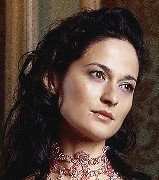

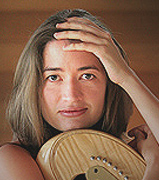
program
Frühlingsstimmen Walzer
soprano, harp & violin
Vorrei Spiegarvi, o Dio
soprano, harp & violin
Lascia ch'io pianga de Rinaldo
harp & violin
White Cockatoo Spirit Dance
violin
Meditation
Mayeela
soprano, harp & violin
The Jade Mountain (Nos. II & IV)
high voice & harp
an Australian classic:
And the Band Played Waltzing Matilda
soprano, choir, harp & violin
The Fighters Who Fell
choir
Corpus Christi Carol
soprano & harp
Meditation
harp & violin
Afghan Lullaby
soprano, harp & violin
Sonata (first movement)
harp
Tango Etude
violin
Tango Jalousie
violin & harp
Leonard Bernstein (music):
Somewhere
soprano, harp & violin
Bill Gleeson (music):
My Country
soprano, harp & violin
Annalisa Kerrigan
Annalisa Kerrigan makes a refreshing change ... it is her talent that has spoken for her.
Daily Telegraph, Sydney
this recording will delight those who find satisfying solace in music's gentler moods ...
Limelight, Sydney
The voice of an angel ... so pure, so perfect, that whatever you are doing, you will want to stop and listen
Ray Martin, Channel 9
Keith McGowan, 3AW Radio
Anthony Clark, The Bulletin

1552 x 2016, 72dpi, 708kb
photographer unknown

966 x 1382, 300dpi, 592kb
photograph by farina fotographic
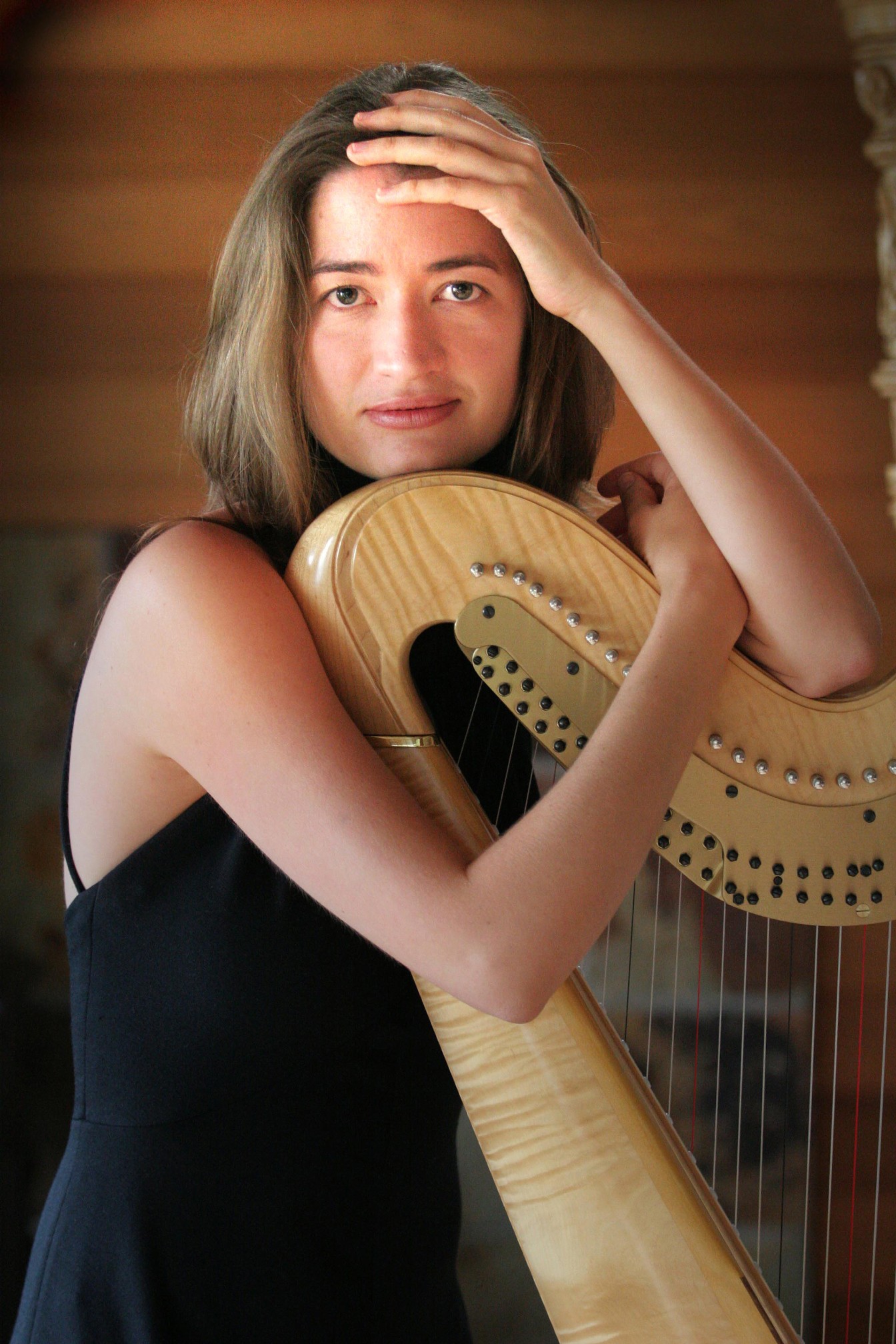
1344 x 2016, 72dpi, 556kb
photograph by Greg Barrett
Jennifer Hoy
Genevieve Lang
introduction, continued:
Due to the decree of the New Zealand Prime Minister, Helen Clark, which was supported by John Howard, the voice of John Farnham will not be heard at Anzac Cove on (Anzac Day 2005). This makes sense. After all, to some at least, the Anzac Day commemorations in Turkey have become too much of a backpackers' beach party.
Enquiries, comments, telephone bookings? Call Wesley-Smith on 02 4465 1299 or email him (concert@wesley-smith.info).
a pre-concert dinner idea!
program notes
Frühlingsstimmen
(Voices of Spring)
op.410 (1883)
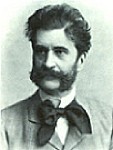
by Johann Strauss II (1825-1899)
arranged for soprano, harp & violin by Genevieve Lang
Frühlingsstimmen ... was intended as a waltz with a solo voice accompaniment (as opposed to a choral waltz) ... the famous coloratura soprano Bertha Schwarz (stage name Bianca Bianchi) was to sing the waltz at a grand matinée charity performance at the Theater an der Wien in aid of the 'Emperor Franz Josef and Empress Elisabeth Foundation for Indigent Austro-Hungarian subjects in Leipzig' ... The waltz makes a grand entry in the key of Bb major with loud chords preceded with the waltz' three beats to the bar ushering the first waltz's gentle and swirling melody. The 2nd waltz section invokes the joys of spring ... The plaintive and dramatic 3rd section in F minor probably suggests spring showers whereas the 4th section that follows breaks out from the pensive mood with another cheerful melody in Ab major. Without a coda, the familiar first waltz melody makes a grand entrance before its breathless finish ... [more]
two classical works:
Vorrei spiegarvi, o Dio
aria for soprano & orchestra, K. 418 (1783)
by Wolfgang Amadeus Mozart (1756-1791)
arranged for soprano & harp by Genevieve Lang
Vorrei spiegarvi, o Dio was written in 1783 as an insertion aria for Il curioso indiscreto, an opera by Anfossi, along with No, che non sei capace and Per pieta non ricercate. It is one of Mozart's most delicate and effective, especially in its stunning use of the voice in conjunction with various instruments ... Clorinda, who is in love with the Count, who is promised to Emilia, sings that she wishes she could explain to him why she appears not to return his love. In the fast-paced second part of the aria, she urges him to leave her, telling him to go to Emilia. The whole piece is quite moving as well as being lovely, and an excellent display piece for vocal agility and grace ... [more]
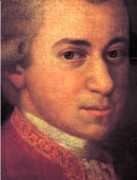
Lascia ch'io pianga
HWV 7, from Rinaldo
by George Frederick Handel (1685-1759)
arranged for soprano, harp & violin
Handel was a prolific recycler of musical ideas. All his early works contain material that he used, often with very little alteration, later on. This aria, Lascia ch'io pianga, which found its final home in the opera Rinaldo, occurs note for note in the earlier work Agrippina and also in two Italian oratorios. Rinaldo, much to the librettist Giacomo Rossi's consternation, was composed in a fortnight in early 1710. The opera enjoyed enthusiastic reviews and success, and marked the arrival of Handel at the Haymarket in London ... [more]
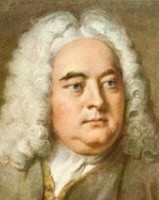
Today is Australia Day, which is all the more reason to include some Australian works. Ross Edwards - possibly the best-known and most-performed Australian composer, after his mentor Peter Sculthorpe - composed in 2005 a short piano piece called Kangaroo Valley Blues. The following piece is one of his so-called Maninyas:
for solo violin (1998)
White Cockatoo Spirit Dance
by Ross Edwards (1943-)
Edwards's distinctive sound-world fuses shapes and patterns from nature with a variety of musical resources which reflect and celebrate Australia's cultural diversity. In his Maninya (dance-chant) pieces, Edwards has pursued an ideal of wholeness - a reintegration of mind, body and spirit and a restoration to 'serious' music of such qualities as lightness, spontaneity and the impulse to dance ... Works such as Yarrageh - Nocturne for Percussion and Orchestra and The Heart of Night reflect Edwards' strong belief in the therapeutic power of music. These works, which have been described as 'contemplation objects in sound', are characterised by a timeless austerity much influenced by birdsong and the mysterious polyphony of the insect chorus in the Australian bush ... [more]
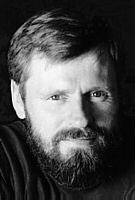
Genevieve, or Zenevjeva, who is of Latvian ancestry, has been exploring Latvian music - hence the following piece:
Main works include Concerto for two oboes & string orchestra [1982], Concerto - Ballade (1984) for two violins, piano & string orchestra [1984], Romantic Music for violin, cello & piano [1980], Dedication to Haydn for flute, cello & piano [1982], Variations for cello, and Destiny, a choral symphony with text by Ojars Vacietis [1985].
Meditation
for solo harp (1990)
by Peteris Plakidis
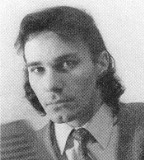
Peteris Plakidis, born in 1947 in Riga, studied composition with Professor V. Utkins at the Latvian State Conservatoire. In 1969, he was awarded a diploma at the then prestigious All-Union Competition of Young Composers, and graduated from the Conservatoire in 1970. Four years later, he was appointed a professor of composition and music theory in the same institution, now called the Latvian Academy of Music, a position he still holds today.
Annalisa is half Chinese-half Irish. While it's not clear which half is which, it is clear that this is a very good combination! In recognition of her ancestry, she has chosen the following three Chinese lyrics and, later, the traditional Irish song Star of the County Down (in 2004 she and Genevieve toured Ireland to great acclaim). There is actually some dispute as to the origins of Mayeela: while some say it's from Xinjiang (a Chinese province, north of Tibet, bordering Kazakhstan), others say it is Kazakhstani. Given that the border was no doubt quite porous, at least regarding the passage of young men and women, the actual place of origin might not be greatly significant ...
"of gurgling springs, clear bird twitter, joyful flocks of sheep, and spanking horses with beating hooves":
Mayeela
traditional, from Xinjiang
arranged for soprano, harp & violin by Genevieve Lang
They all call me Mayeela, poet Mayeela
Teeth so white, voice so pure, singer Mayeela
Happy to sing a merry song,
Play my dongbula, dongbula
From afar, folk all crowd to hear my repertoire
I am a Wali maid, skillful with my thread
White kerchief bordered all around with dainty rosebuds red
Young Kazak men and maids
Bright eyes envy me, envy me
Who can vie with my songs, oh, who will come and try?
White kerchief bordered all around with dainty rosebuds fine
No rival can compete with this voice of mine
Young Kazak men and maids
They all know my name, know my name
They all throng from far hills to hear my joyful song
The dongbula is a stringed musical instrument (plucked) of the Kazak ethnicity in ancient China. The old and young members of Kazak families are all good at playing the instrument. In Turkic language, the name dongbula has special meanings. Dong describes the sound of the music, and bula means to fix the strings.
The Jade Mountain (Nos. II & IV)
settings of poems of the Tang dynasty (618-906AD), translated by Witter Brynner,
for high voice & harp (1972)
by Edmund Rubbra (1901-1986)
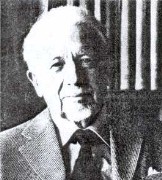
photo courtesy
Alfred Lengnick & Co Ltd
Although one of England's greatest composers, by his death in 1986 the music world had almost forgotten Edmund Rubbra ... Half a century ago you might have stumbled across the bearded composer, hands behind his back, beret on head, strolling down the lanes towards Hughenden or Lacey Green, or sauntering across open fields to the hedgerowed Chiltern ridge opposite his garden workroom, musing on his latest symphony, piano trio or string quartet ... Born on May 23 1901, Rubbra left school at 14 and seemed destined for a life of drudgery as a railway clerk. But he received musical stimulus from the organist of St Matthew's Church in Northampton, and from his parents, both keen amateur musicians. Encouraged by the composer Cyril Scott, Rubbra later studied with Holst, who quickly realised his pupil's worth. Later Rubbra himself became lecturer in music at Oxford, where his pupils revered him for his kindly demeanour and sound advice ... His boyhood interest in the mystic Orient later flowered in The Jade Mountain, five exotic Chinese songs for voice and harp, a combination Rubbra had used movingly in the early 1930s ... [more]
II. On Hearing Her Play the Harp
Are glimmering on a golden fretted harp.
To draw the quick eye of Chou Yü
She touches a wrong note now and then.
He has failed each day to keep his word.
Had I thought how regular the tide is
I might rather have chosen a riverboy.
three traditional songs, from England, Ireland, and America:
traditional, from England
arranged for soprano, harp & violin
1 My young love said to me "My mother won't mind
And my father won't slight you for your lack of kind"
And he laid his hand on me and this he did say:
"It will not be long, love, 'till our wedding day."
And fondly I watched him move here and move there.
And then he came homeward with one star awake,
As the swan in the evening moves over the lake.
3 And the people were saying, "No two e'er were wed,
But one had a sorrow that ne'er was said."
And I smiled as he passed me with his goods and his gear,
And that was the last I saw of my dear.
So softly he came that his feet made no din,
And he laid his hand on me and this he did say,
"It will not be long, love, 'till our wedding day."
This legendary story of a young couple's tragic loss is sung to an ancient gaelic melody believed to have come from Antrim. A young man leaves his home town and his loved one in order to find his fortune, planning to come back and marry her. But believing that she will never see him again, she becomes deathly ill with a broken heart. He does come back, but she thinks he has died and that it is his ghost. Her grief overcomes her, and her life slips away ...
this song is included
on Annalisa's debut CD
waiting on an angel
ABC Classics 476 7928
for sale at the concert
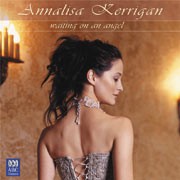
Star of the County Down
traditional, from Ireland
arranged for soprano, harp & violin
Old Irish ballad Star of the County Down shares its melody with the church hymn Led By the Spirit and many other works. It has been recorded by, amongst others, The Chieftains, Flash Girls, Yo-Yo Ma and Van Morrison. A version in Hebrew was sung by Ehud Banai, called HaKochav shel Mahoz Gush Dan ("The star of the Gush Dan county", Gush Dan being a major area in central Israel). The song is notable for its particularly intricate rhyme scheme: the lines are in rhyming couplets but every line also has an internal rhyme on the second and fourth feet. It is sung from the point of view of a young man who chances to meet a charming lady by the name of Rose McCann, referred to as the "star of the County Down". From a brief encounter the writer's infatuation grows until, by the end of the ballad, he plans to marry her. [information from here]
1 Near Banbridge town, in the County Down, one morning in July
Down a boreen green came a sweet colleen and she smiled as she passed me by
She looked so sweet from her two bare feet to the sheen of her nut-brown hair
Such a coaxing elf, sure I shook myself to make sure I was really there
From Bantry Bay up to Derry Quay and from Galway to Dublin town
No maid I've seen like the sweet colleen that I met in the County Down
And I said, says I, to a passerby "who's the maid with the nut-brown hair?"
He smiled at me, and with pride says he "That's the gem of Ireland's crown:
Young Rosie McCann from the banks of the Bann - she's the star of the County Down"
3 I've travelled a bit but never was hit since my roving career began
But fair and square I surrendered there to the charms of young Rose McCann
I'd a heart to let and no tenant yet did I meet within shawl or gown
But in she went and I asked no rent from the star of the County Down.
And I'll try sheep's eyes and deludhering lies on the heart of the nut-brown rose
No pipe I'll smoke, no horse I'll yoke, though with rust my plow turns brown
Till a smiling bride by my own fireside sits the star of the County Down
The House of the Rising Sun
traditional, from America
arranged for soprano, harp & violin
1 There is a house in New Orleans they call the Rising Sun
It's been the ruin of many a poor girl, and me, oh God, were one.
But being so young and foolish, let a gambler lead me astray.
3 Go tell my baby sister, "Don't do like I have done,
Please shun that house in New Orleans they call the Rising Sun."
I'm going back to New Orleans to live in that Rising Sun.
With uncertain origins, the folk ballad House of the Rising Sun - sometimes called Rising Sun Blues - has many purported authors. The phrase "House of the Rising Sun" is a euphemism for a brothel, or, possibly, for a prison, but it's uncertain whether the place being sung about is real or fictitious. Various places in New Orleans have been proposed as the inspiration for the lyric, with strong evidence having been uncovered in 2005 after the excavation of an old garage site in the French Quarter ... [see here and here]
There is a house in New Orleans
They call the Rising Sun
It's been the ruin of many a poor boy
And me, O God, for one
I'd 'a' been at home today
Being so young and foolish, poor boy
Let a rambler lead me astray
Never do like I have done
To shun that house in New Orleans
They call the Rising Sun
She sold those new blue jeans
My sweetheart, he's a drunkard, Lord, Lord,
Drinks down in New Orleans
The only thing a drunkard needs
Is a suitcase and a trunk
The only time he's satisfied
Is when he's on a drunk
Passes them around
Only pleasure he gets out of life
Is hoboin' from town to town
And the other one on the train
I'm going back to New Orleans
To wear that ball and chain
My race is almost run
Going back to spend the rest of my days
Beneath that Rising Sun
interval - enjoy a cool drink and a nibble provided by Rosemary Stanton and other members of the Kangaroo Valley-Remexio Partnership, a local organisation working to assist projects in East Timor ... (see here)
And the Band Played 'Waltzing Matilda'
by Eric Bogle
arranged for soprano, choir, harp, violin & images by Martin Wesley-Smith
additional verses by Peter Wesley-Smith
Now when I was a young man I carried me pack
And I lived the free life of a rover
From the Murray's green basin to the dusty outback
Well, I waltzed my Matilda all over
It's time you stop ramblin', there's work to be done'
So they gave me a tin hat, and they gave me a gun
And they marched me away to the war
As the ship pulled away from the quay
Amidst the songs and the cheers, the flag waving, and tears,
We sailed off for Gallipoli
How our blood stained the sand and the water
And of how in that hell that they called Suvla Bay
We were butchered like lambs at the slaughter
He showered us with bullets and he rained us with shell
And in five minutes flat he'd blown us all to hell
Nearly blew us right back to Australia
When we stopped to bury our slain
We buried ours, and the Turks buried theirs,
Then we started all over again.
In that mad world of blood, death and fire
And for ten weary weeks I kept myself alive
Though around me the corpses piled higher
And when I woke up in my hospital bed
And saw what it had done, well, I wished I was dead
Never knew there was worse things than dying
So I'll go no more Waltzing Matilda
All around the green bush far and free
To hump tent and pegs, a man needs both legs,
No more waltzing Matilda for me
And they shipped us back home to Australia
The legless, the armless, the blind, the insane,
Those proud wounded heroes of Suvla
I looked at the place where me legs used to be,
And thanked Christ there was nobody waiting for me,
To grieve, to mourn, and to pity
As they carried us down the gangway
But nobody cheered, they just stood and stared
Then they all turned their faces away.
And I watch the parades pass before me
And I see my old comrades, how proudly they march
Reviving old dreams of past glories
They're tired old heroes from a forgotten war
And the young people ask "What are they marching for?"
And I ask myself the same question.
And the old men still answer the call
But as year follows year, more and more disappear
Someday no one will march there at all
Who'll come a-waltzing Matilda with me
And their ghosts may be heard as you pass the billabong
Who'll come a-waltzing Matilda with me?
to read all Eric Bogle's lyrics, click here
And The Band Played 'Waltzing Matilda' commemorates the battle of Gallipoli between Australian and Turkish forces during the First World War. It is written from the point of view of a young Australian man who is sent to Gallipoli. The song incorporates the melody and a few lines of Waltzing Matilda's lyrics at its conclusion. The song has been recorded by, amongst many others, the Clancy Brothers, June Tabor, Slim Dusty, John Williamson, The Dubliners, Joan Baez, Skids, and the Pogues. Midnight Oil has a live version of the song which has circulated on the Internet.
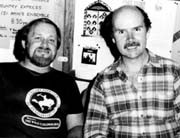
with American songwriter Tom Paxton
(What Did You Learn in School Today?,
Marvellous Toy etc)
Eric Bogle is roundish, shortish, baldish, fiftyish and Scottish. An Australian resident for 35 years, and an Australian citizen since 1982, he is an internationally known and respected singer/songwriter and has been taking his music around the world for the last 25 years or so, in spite of warnings to "stop it or you'll go blind".
With Eric Bogle's permission, Peter Wesley-Smith has modified the original lyric, putting it into the third person and adding more verses:
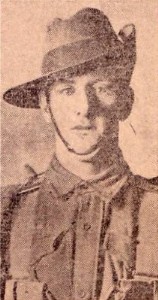
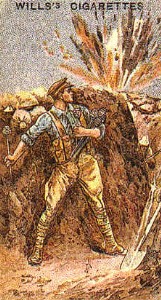
When Tom was a young man he carried his pack
And he lived the free life of a rover
From the Murray's green basin to the dusty outback
Well, he waltzed his Matilda all over
It's time you stopped ramblin', there's work to be done"
So they gave him a tin hat, and they gave him a gun
And they marched him away to the war
As the ship pulled away from the quay
Amidst the songs and the cheers, the flag waving, and tears,
They sailed off for Gallipoli
How their blood stained the sand and the water
And of how in that hell that they called Suvla Bay
They were butchered like lambs at the slaughter
He showered them with bullets and he rained them with shell
And in only five minutes he'd blown them to hell
Nearly blew them right back to Australia
When they stopped to bury the slain
We buried ours, and the Turks buried theirs
Then they started all over again
In that mad world of blood, death and fire
And for ten weary weeks he was barely alive
Though around him the corpses piled higher
And when he woke up in his hospital bed
And saw what they'd done, well, he wished he was dead
Never knew there was worse things than dying
The swaggie life now rather grim
To hump tent and pegs, a man needs both legs
No more waltzing Matilda for him
And they shipped them back home to Australia
The legless, the armless, the blind, the insane,
Those proud wounded heroes of Suvla
And as the ship pulled into Circular Quay,
Tom looked at the place where his legs used to be,
And muttered "Thank Christ no-one's waiting for me,
To grieve, to mourn, and to pity"
As they carried them down the gangway
But nobody cheered, they just stood and stared
Then they all turned their faces away.
To watch the parades pass before him
And to see his old comrades, how proudly they marched
But the old dreams had started to bore him
They were tired old heroes from a forgotten war
And the young people asked "What are they marching for?"
And Tom asked himself the same question
And the old men still answer the call
But as year follows year, more and more disappear
Someday no one will march there at all
But young men still dress up in khaki
And the pollies we elect still send them to war
Against Afghan and Iraqi
And march in their ribbons and medals and braid
But imagine one April an ANZAC parade
With soldiers too few to go marching
In their spit, polish, slouch hats and starch
While the general salutes this year's new recruits
There will always be more for the march
The Prime Minister stands to the fore
And the ghosts may be heard through the brass and the kettle-drum
Ghosts of the men who had been to the war
You'll come a-waltzing Matilda with me
And their ghosts may be heard as you pass by the billabong
You'll come a-waltzing Matilda with me
download photographs |
program |
Annalisa Kerrigan |
Jennifer Hoy |
Genevieve Lang |
KV-RP |
for choir-members |
post-concert review |
top
The Fighters Who Fell
for choir, a cappella
poem by Xanana Gusmão, translated from the Portuguese by Agio Pereira and Rob Wesley-Smith then versified by Peter Wesley-Smith
set to the melody of the East Timorese folk-song Kolele Mai by Martin Wesley-Smith
A different arrangement of The Fighters Who Fell appears in the Wesley-Smith choral piece, Thank Evans [1999]. Another one appears in their large piece for bass soloist, girls choir and orchestra, A Luta Continua [2005], performed by The Tasmanian Symphony Orchestra in Hobart in April 2005. Martin has composed many pieces to do with the situation in East Timor, including Kdadalak (For the Children of Timor) [1977] and Welcome to the Hotel Turismo [2000]. In June 2005 The Song Company performed their award-winning audio-visual piece Quito (about East Timor and schizophrenia) in Kangaroo Valley Hall (note: this excellent group - one of the world's leading vocal ensembles - will be doing what has become their annual concert in Kangaroo Valley on Saturday June 16 2007 (for information, send email here)).
This short song will be sung by members of a choral music class organised by the Wollongong Conservatorium of Music and who rehearse as a choir, under the direction of Carlos Alvarado, in the Court House in Berry. Choristers will include Liz Aitken, Carlos Alvarado, Nell Britton, Janette Carter, Amanda Collins, Robert Farnham, Helen Gelberman, Karen Harrison, Troy Harrison, Alexandra Höhr, Alexandra Holliday, Teresa Keyzer, Peter Morgan, Chris Nobel, Patsy Radic, Peter Stanton, Jo Stirling and Peter Wesley-Smith.
Timor grasses grow
warm the fractured bones
of the fighters who fell
beautify the bones
of the fighters who fought for freedom
fought till they fell
a sad note: Nilo Titi Sari
Dear Friends,
We were saddened to learn of the death two days ago of one of the Anin Murak Choir members who came to Australia in 2000. She was Nilo Titi Sari, a cousin of our staff member, Milka Pinheiro. Nilo was eight months pregnant and had three other children. Her death reminds us of the fragility of life in Timor-Leste. Here is part of Antonio de Padua's email:
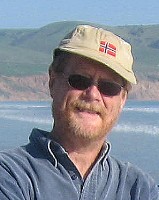
The Wesley-Smiths have written many songs (for kids as well as for grown-ups), choral pieces etc together, including the full-length Boojum!, about Lewis Carroll (premiered at the 1986 Adelaide Festival of Arts in front of the Queen of England!). Born in Adelaide in 1945, they each had separate academic careers (Martin at the Sydney Conservatorium of Music, Peter at the University of Hong Kong, where he was Professor of Constitutional Law) before deciding, in the late 1990s, to live together in Kangaroo Valley in order to concentrate on creative projects. These have included the centenary-of-federation piece Black Ribbon, for soloists, choir & orchestra (2001), commissioned by The Canberra Choral Society, True, for soprano, choir, flute & piano (2002), commissioned by the Canberra Gay & Lesbian Qwire, and doublethink, for six singers (2005), commissioned by The Song Company. Peter has published three books of verses for children (e.g. The Ombley-Gombley and Foul Fowl) and the epic nonsense poem The Hunting of the Snark: Second Expedition, and has had verses published in various anthologies (e.g. Putrid Poems, Petrifying Poems, Vile Verse and Off the Planet). One of his song lyrics is the as-yet-uncompleted I Don't Think I'm Indecisive, Am I?, which is a humerus ditty about his upper arm.
Corpus Christi Carol
by Benjamin Britten (1913-1976)
arranged for soprano & harp by Genevieve Lang
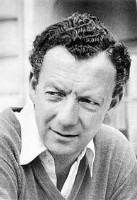
Corpus Christi Carol (1961) is a Middle English hymn (or carol) that dates from the 15th century. The writer remains anonymous. Its haunting lyric is commonly thought to be concerned with the legend of the grail, but recent scholarship has suggested that it may have been composed for the grief of the displaced Anne Boleyn (former wife of Henry VIII, whose badge was a falcon) ... The carol was included on Jeff Buckley's debut album Grace in 1994, and on Annalisa's album Waiting on an Angel ... [more]
Annalisa Kerrigan |
Jennifer Hoy |
Genevieve Lang
pre-concert dinner idea |
post-concert review
KV-RP |
top
Corpus Christi Carol
Lulley, lulley, lully, lulley,
The falcon hath born my mak away.
He bare hym into an orchard brown.
That was hanged with purpill and pall.
Hit was hangid with gold so rede.
His wowndes bledyng day and nyght.
And she wepeth both nyght and day.
"Corpus Christi" wretyn theron.
waiting on an angel
Meditation
(from the opera Thaïs, 1894)
for piano & violin
by Jules Massenet (1842-1912)
arranged for harp & violin
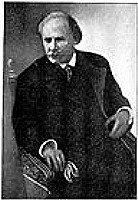
Massenet, born in Montaud, France, was one of the best-respected French composers of his day. His operas shared the opera vogue of nineteenth century France with Wagner's, their direct opposite. Massenet's twenty-five were of the Meyerbeer-Offenbach type, that is, light and popular, rather than "grand". Some of them helped to insure the success of Oscar Hammerstein's opera experiment in New York. Manon is a typical Massenet opera. Its superficial appeal is strong, thanks to its extremely singable melodies.
two Australian works:
Afghan Lullaby
words & music by Martin Wesley-Smith (1945-)
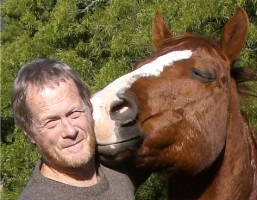
In 2002 I composed an audio-visual piece about Afghanistan called Merry-Go-Round, for clarinet, cello & computer, commissioned by Charisma (Ros Dunlop, clarinet, and Julia Ryder, cello). Photography by George Gittoes and Alice Wesley-Smith. Australia, as a member of the Coalition of the Willing, had just helped America bomb Afghanistan back into the Stone Age, bringing the people freedom and democracy. There was no need, therefore, for Afghan refugees to land on Australian soil - they could go home and enjoy the fruits of our labour and sacrifice. Nor was there any need for a mother to sing this fretful lullaby, which I included as an example of what life was like before we gave the people such happiness and hope.
Annalisa Kerrigan |
Jennifer Hoy |
Genevieve Lang
pre-concert dinner idea |
post-concert review
KV-RP |
top
go to sleep, my son
it's time for everyone
to dream and let the troubles fly away
when your daddy comes again
we'll be together
in another place somewhere
we'll all be safe, we'll be happy to stay
where the people are so friendly
and will welcome us to share
a land where one can live without a care
somewhere, some day
we will leave this merry-go-round
your daddy will come for you and me
fly away 'cross the sea
away from this misery
we'll live free
(c) 2002 Martin Wesley-Smith
Sonata (first movement only)
by Peggy Glanville-Hicks (1912-1990)
for harp
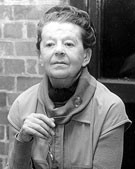
Australian composer Peggy Glanville-Hicks was born in Melbourne on Dec. 29, 1912. Her creative gift was manifest from early childhood, and at the age of fifteen she began lessons in composition with Fritz Hart. In 1931 she won an open scholarship to the Royal College of Music in London, where for five years she studied with Vaughan Williams in composition, Arthur Benjamin for piano, and with Constant Lambert and later Sir Malcolm Sargent in conducting. In 1936, she was awarded the Octavia Travelling Scholarship for studies in Vienna with Egon Wellesz, and in Paris with Nadia Boulanger.
a couple of tangos:
Tango Etude No.3
for Violin
by Astor Piazzolla (1921-92)
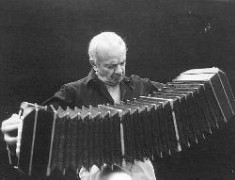
Astor Piazzolla was born in Argentina in 1921 to Italian parents. Shortly afterwards the family moved to New York where the young Piazzolla was exposed to the music of Duke Ellington and Cab Calloway, and he began to study the bandoneon (button accordion).
Robert Leaver: "Probably the most famous artist to ever emerge from Argentina, Astor Piazzolla ... formed the Octeto Buenos Aires in 1955 and, in 1960, his Quinteto Nuevo Tango, an ensemble composed of violin, guitar, bass, piano and bandoneon. His sense of modernity and understanding of jazz were incorporated into bold arrangements that ebb and flow between gentle melodic phrases and tempestuous crescendos. The 1970s and '80s found him playing to larger worldwide audiences and finally attaining respect at home in Argentina. A prolific composer and recording artist, Piazzolla's popularity after his 1992 death continues to grow as fans explore the labyrinth of passion on display in his music. This legend breathed new, vital life into an old form."

(1869-1963)
arranged for
violin & harp by
Genevieve Lang
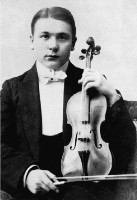
Jorge Luis Borges:
The tango is a direct expression of something that poets have often tried to state in words: The belief that a fight may be a celebration.
One day the papers were filled with sensational descriptions of a crime of passion, a jealousy-murder, which made such an impression on me that I could not stop thinking about it. During my morning walk across the fields, however, I came to the sensible conclusion that the horrifying drama was really none of my business, so it faded gradually into the background. Nevertheless, the word "Jealousy" stuck in my mind as a title to which notes began to attach themselves. When I got home I sat down at my desk and after a few hours Tango Jalousie was finished.
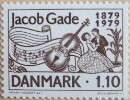
download photographs |
program |
Annalisa Kerrigan |
Jennifer Hoy |
Genevieve Lang |
KV-RP |
pre-concert dinner idea |
top
two songs from musicals:
Somewhere
lyric: Stephen Sondheim (1930-)
music: Leonard Bernstein (1918-1990)
arranged for soprano, harp & violin by Genevieve Lang
At about the age of ten, around the time of his parents' divorce, Sondheim became friends with Jimmy Hammerstein, son of the well-known lyricist and playwright Oscar Hammerstein II. Oscar became a surrogate father to Sondheim, having a profound influence, especially in the development of Sondheim's love for musical theater. Indeed, it was at the opening of Hammerstein's hit show South Pacific that Sondheim met Harold Prince, who would later direct many of Sondheim's most famous shows ... [more]
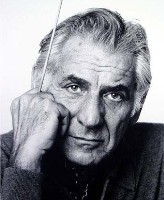
Leonard Bernstein
in 1977
pre-concert dinner idea
Annalisa Kerrigan
Genevieve Lang
Jennifer Hoy
downloads
program
KV-RP
top
There's a place for us
Somewhere a place for us
Peace and quiet and open air
Wait for us
Somewhere
Some day a time for us
Time together with time spare
Time to learn, time to care
Some day
We'll find a new way of living
We'll find a way of forgiving
Somewhere ...
A time and place for us
Hold my hand and we're halfway there
Hold my hand and I'll take you there
Somehow
Some day
Somewhere!
(c) 1956, 1957
Amberson Holdings LLC
and Stephen Sondheim;
copyright renewed;
publisher: Leonard Bernstein
Music Publishing Company LLC
West Side Story is one of the greatest musicals ever. Composer Leonard Bernstein easily matches the very best of Oscar and Hammerstein musicals with songs such as Maria, Tonight and Somewhere, but the inclusion of gang music with an edge and terrific latin numbers and orchestral interludes brings the whole experience to a level which has never been exceeded ... The story is based upon Shakespeare's Romeo and Juliet with the Montague and Capulet families replaced by rival gangs, the Jets and Sharks, in New York's West Side. Romeo becomes Tony and Juliet becomes Maria ... One of the particular hallmarks of this musical which raises it above others in the genre is that all the key components fit together so perfectly. Bernstein's music, the lyrics from Stephen Sondheim and the choreography from Jerome Robbins are so well integrated and complementary that it's as if the three great artists thought as one ... Well-known songs from the show include, apart from Maria and Tonight, America, Gee, Officer Krupke and I Feel Pretty. Somewhere is an emotional duet where Maria and Tony desperately wish they could turn back the clock and escape from their predicament ... [more]
My Country
lyric: Dorothea Mackellar (1885-1967)
music: Bill Gleeson
arranged for soprano, harp & violin by Annalisa Kerrigan
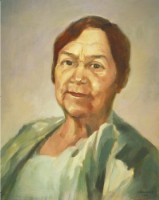
[National Library of Australia]
"I love a sunburnt country"
for biographical information, click here
Annalisa Kerrigan
Genevieve Lang
Jennifer Hoy
downloads
program
KV-RP
top
The love of field and coppice
Of green and shaded lanes
Of ordered woods and gardens
Is running in your veins
Strong love of grey-blue distance
Brown streams and soft dim skies
I know but cannot share it
My love is otherwise
A land of sweeping plains
Of ragged mountain ranges
Of droughts and flooding rains
I love her far horizons
I love her jewel-sea
Her beauty and her terror -
The wide brown land for me!
All tragic to the moon
The sapphire-misted mountains
The hot gold hush of noon
Green tangle of the brushes
Where lithe lianas coil
And orchids deck the tree-tops
And ferns the warm dark soil
Her pitiless blue sky
When sick at heart, around us
We see the cattle die -
But then the grey clouds gather
And we can bless again
The drumming of an army
The steady, soaking rain
Land of the Rainbow Gold
For flood and fire and famine
She pays us back threefold -
Over the thirsty paddocks
Watch, after many days
The filmy veil of greenness
That thickens as we gaze
A wilful, lavish land -
All you who have not loved her
You will not understand -
Though earth holds many splendours
Wherever I may die
I know to what brown country
My homing thoughts will fly
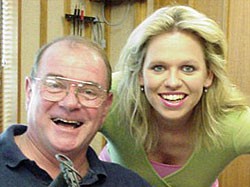
On Friday October 20 last year, Tamworth Town Hall saw the world premiere performance of Dorothea, a new musical written and directed by former ABC radio presenter Bill Gleeson based on the book My Heart My Country by Adrienne Howley. It was presented by the Tamworth Musical Society, believed to be the oldest amateur company in Australia. According to a reviewer, "It was fast moving, with unexpected delightful spots, smooth scenery changes, lots of colour and good voices."
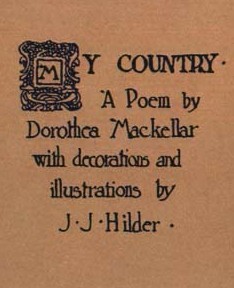
That, folks, is it! One suspects, however, that if the audience were to express enough interest in the idea then the Divine Miss K might be persuaded to sing one or both of the following two songs:
I Could Have Danced All Night
lyric: Alan Jay Lerner (1918-1986)
music: Frederick Loewe (1901-1988)
arranged for soprano, harp & violin by Genevieve Lang
I could have danced all night!
I could have danced all night!
And still have begged for more
I could have spread my wings
And done a thousand things
I've never done before
Why all at once my heart took flight
I only know when he
Began to dance with me
I could have danced, danced, danced all night!
Alan Jay Lerner
I Could Have Danced All Night originated in the musical My Fair Lady. In the film version it was supposedly sung by Audrey Hepburn, but she in fact mimed it. One of the first singers to have sung this song was Julie Andrews when the musical was appearing on Broadway ... [more]
The Day Before Spring
Brigadoon
Paint Your Wagon
My Fair Lady
Gigi
Camelot
1945
1947
1951
1956
1958
1960
The Lonely Goatherd
lyric: Oscar Hammerstein II (1895-1960)
music: Richard Rodgers (1902-1979)
arranged for soprano, harp & violin by Genevieve Lang
Lay ee odl lay ee odl lay hee hoo
Loud was the voice of the lonely goatherd
Lay ee odl lay ee odl-oo
Lay ee odl lay ee odl lay hee hoo
Lusty and clear from the goatherd's throat heard
Lay ee odl lay ee odl-oo
O ho lay dee odl lee o, lay dee odl lee o lay
Lay ee odl lay ee odl lay hee hoo
Men on a road with a load to tote heard
Lay ee odl lay ee odl-oo
Lay ee odl lay ee odl lay hee hoo
Men drinking beer with the foam afloat heard
Lay ee odl lay ee odl-oo
Lay ee odl lay ee odl lay hee hoo
She yodeled back to the lonely goatherd
Lay ee odl lay ee odl-oo
Lay ee odl lay ee odl lay hee hoo
What a duet for a girl and goatherd
Lay ee odl lay ee odl-oo
Odl lay ee (odl lay ee)
Odl lay hee hee (odl lay hee hee)
Odl lay ee ...
Lay ee odl lay ee odl lay hoo hoo
She yodeled back to the lonely goatherd
Lay ee odl lay ee odl-oo
Lay ee odl lay ee odl lay hmm hmm
What a duet for a girl and goatherd
Lay ee odl lay ee odl-oo
Soon the duet will become a trio
Lay ee odl lay ee odl-oo
Odl lay hee hee, odl lay ee
Odl lay odl lay, odl lay odl lee, odl lay odl lee
Odl lay odl lay odl lay
Rodgers (L) and
Hammerstein:
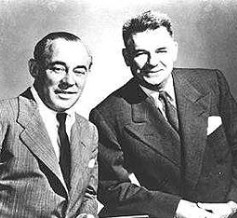
"HOO!", indeed ...

The Kangaroo Valley-Remexio Partnership
left: kids in Remexio, March 2002
Waltzing Matilda
Kangaroo Valley Hall, Kangaroo Valley
tickets: $25, $15 (concession), from
Kangaroo Valley Supermarket
enquiries: call Martin Wesley-Smith
on 4465 1299 or email him
tickets selling fast!
Note: as of January 23, this concert has SOLD OUT.
It is worth showing up, however, in case of cancellations and no-shows.
First come, first served. No numbered seating: first in best dressed.
Concert produced for KV-RP by Martin Wesley-Smith with contributions from
Pamela Davis, Bob Dunn, Helen George, John George, Don Godden, Diana Jaffray, Kangaroo Valley
Newsagency, Kangaroo Valley Supermarket, Nigel Lewis, Derek Lukas, Les Mitchell, Michael Moore, Louise Morgan, Peter Morgan, Chris Nobel, Peter Stanton, Rosemary Stanton, Libby Turnock, Paul Turnock, Belinda Webster,
Peter Wesley-Smith and others.
After the event (a great success from every point of view!), the following review, by Carl Leddy, appeared in local rag The Kangaroo Valley Voice, February 2007, p7:
Australia Day concert had the audience begging for more
free web counter
html by Webmaster Wally of Don Key Design
page last updated February 21 2007